Navigating the landscape of custom plastic mold manufacturing in China presents a significant opportunity for overseas businesses to achieve substantial cost savings and access world-class engineering. However, the central question of “custom plastic mold cost” is rarely straightforward. A quoted price can vary by hundreds of percent, influenced by a complex matrix of technical specifications, supplier capabilities, and procurement strategies. For buyers in 2024 and beyond, understanding these variables is not just about budgeting—it’s about risk management, quality assurance, and ensuring project success. This guide cuts through the noise to provide a professional, actionable framework for your procurement journey, empowering you to make informed decisions and secure true value from your chosen China mold factory.
Understanding the Core Cost Drivers
Before engaging with suppliers, you must internalize the primary factors that dictate the final investment. The custom plastic mold cost is fundamentally built on three pillars: design complexity, material selection, and manufacturing precision. A simple, single-cavity injection mold for a low-volume prototype will command a vastly different price than a multi-cavity, hot-runner system mold for high-volume production with tight tolerances. Key elements include part size and geometry (undercuts, thin walls), surface finish requirements (textured, polished), mold steel grade (pre-hardened vs. hardened steels like H13 or S136), and the mold lifecycle (number of shots expected). Additionally, the choice of auxiliary systems—such as cooling channels, ejection mechanisms, and whether to use a hot runner system—can add considerable expense but are often crucial for part quality and production efficiency. A clear, detailed technical data sheet (TDS) or 3D model is your most powerful tool for receiving comparable and accurate quotations.
The Critical Phase of Supplier Verification and Selection
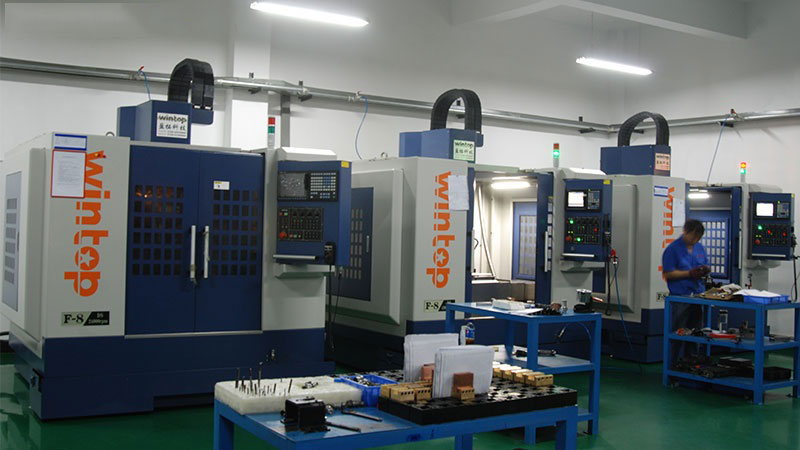
The quoted price is meaningless without the context of the supplier’s credibility. In 2026, due diligence is non-negotiable. Start by categorizing China mold factories: high-precision shops catering to automotive or medical sectors, mid-tier suppliers for consumer goods, and budget-focused workshops. Your project requirements should dictate your search. Go beyond Alibaba storefronts. Conduct video meetings to tour facilities virtually, assess their CNC, EDM, and CMM equipment, and request client references from your region. A professional supplier will proactively discuss your design for manufacturability (DFM), suggesting optimizations that can reduce both mold cost and future part cost. Verify their certifications (ISO 9001 is a baseline) and inquire about their in-house quality control processes. Remember, the cheapest bid often carries hidden expenses in delays, rework, or mold failure. The goal is to find a partner whose capability aligns with your quality and precision needs.
Strategic Procurement: From RFQ to Contract Clarity
A structured Request for Quotation (RFQ) process is your shield against misunderstandings. Your RFQ package should include the 3D part file (STEP or IGS), 2D drawings with critical dimensions and tolerances, material specification, expected annual volumes, and target part cost. Explicitly request a detailed cost breakdown: mold base, cavity/core inserts, actions (lifters, sliders), runner system, and any special treatments (nitriding, hardening). This transparency allows for meaningful comparison. During negotiations, discuss payment terms (e.g., 30-50% deposit, balance before shipment), project timeline with milestones, and most importantly, the protocol for design changes. A robust contract should cover intellectual property (IP) protection, warranty period (typically 1-2 years or a specified number of shots), liability for defects, and the terms for mold repair and maintenance. Defining these elements upfront protects your investment and sets clear expectations.
Implementing Proactive Quality Control Throughout the Process
Managing quality remotely is the paramount challenge in international procurement. A comprehensive quality control strategy must be integrated from the start. Insist on a staged inspection protocol. First, a pre-production inspection of the mold steel material certificates. Second, a First Article Inspection (FAI) when the initial sample parts are produced from the finished mold. This should involve a dimensional report from the supplier’s CMM, matching the part against your 2D drawing. For critical projects, hiring a third-party inspection company in China for a Tooling Trial Run (TTR) is a wise investment. They can witness the mold in operation, measure parts, and verify production rate and stability. Clearly define the sample approval process before mass production begins. This layered approach to quality control mitigates the risk of receiving a non-conforming mold, which is far more costly to rectify after it has been shipped to your country.
Long-Term Partnership and Total Cost of Ownership
The most sophisticated buyers look beyond the initial purchase price to the Total Cost of Ownership (TCO). A well-made, properly maintained injection mold from a reliable partner will yield lower cost-per-part over its entire lifespan. Discuss post-sales support: will the supplier store the mold? What are the costs and lead times for future production runs or mold modifications? A partner invested in a long-term relationship is more likely to support you with engineering expertise for future projects. Furthermore, consider the production efficiency their mold enables—a superior design with efficient cooling can significantly reduce cycle times, offering ongoing savings in unit cost. This strategic perspective transforms the procurement from a transactional expense into a capital investment that drives your product’s profitability for years.
Conclusion
Successfully importing a custom plastic injection mold from China in 2026 demands a blend of technical understanding, rigorous process, and strategic partnership. By mastering the core cost drivers, executing thorough supplier verification, managing procurement with clear contracts, enforcing stringent quality control, and focusing on long-term value, you transform a complex overseas venture into a competitive advantage. The true measure of success is not merely the initial custom plastic mold cost, but the reliable, high-quality production and sustainable profitability it delivers. With this guide as your framework, you are equipped to navigate the market confidently and secure a mold solution that perfectly balances cost, quality, and performance for your business.
Work With Us
As a professional China mold manufacturer, we provide one-stop mold solution for overseas buyers.
📞 Phone: +86-18605944639
💬 WhatsApp: +8618605944639
🌐 Website: bestmoldworks.com
📧 Email: [email protected]